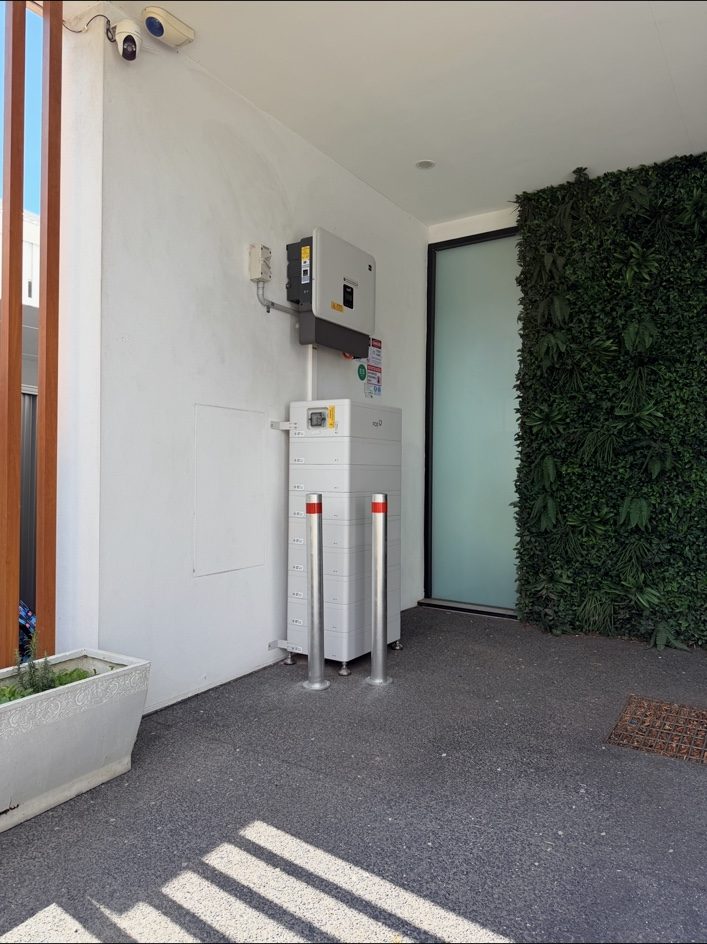
Retrofit or new
Adding a battery to existing solar
If you already have solar, the first question is whether your inverter and switchboard can support a battery, and whether it makes sense as a DC-coupled or AC-coupled addition. We check the brand, age and condition of your existing system before recommending an approach.
If you're starting from nothing, solar and battery can be designed and installed together — see solar & battery upgrades if you have an older solar system that also needs attention.
What's included
What a battery installation involves
Compatibility check
Existing inverter brand, age and warranty status reviewed before we recommend a specific battery.
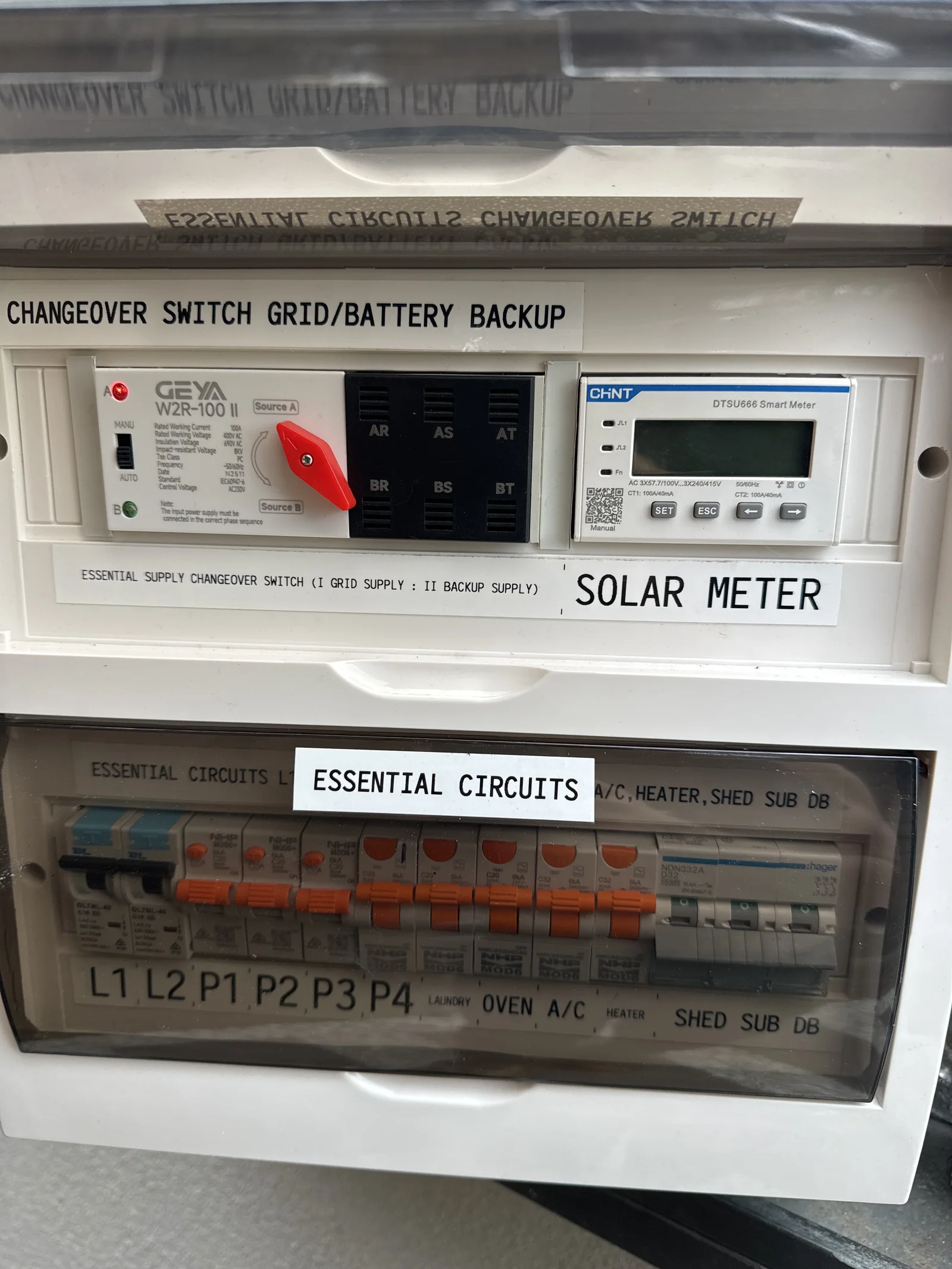
Backup circuit planning
We help you decide which circuits — lighting, fridge, internet — stay powered during an outage, and wire backup accordingly.
Switchboard assessment
Confirms there's safe capacity and correct protection for the added equipment.
Licensed installation
Battery, inverter and any backup switchboard work completed to Australian Standards.
Commissioning & app setup
System tested and, where applicable, monitoring app configured so you can see performance.
Ongoing support
A point of contact for servicing, firmware questions or expanding storage later.
Federal rebate
The Cheaper Home Batteries Program, explained
A federal discount applied to eligible battery systems (5-100 kWh) at the time of purchase — your installer applies it directly to your quote, not a separate claim afterwards.
Worked example — 10 kWh battery, Sydney (Zone 3)
At the current Zone 3 rate of approximately $252 per usable kWh, a 10 kWh battery (under the 14 kWh full-rate cap) works out to roughly $2,520 off the upfront cost — commonly summarised as around a 30% discount on typical system pricing.
Rate applies in full up to 14 kWh, then tapers (60% from 14-28 kWh, 15% from 28-50 kWh). The rate steps down roughly every 6 months until the scheme ends in 2030 — next change expected 1 Jan 2027. Indicative only, as of 24 Sep 2026; your exact eligible rebate depends on your installation date and is confirmed as part of your quote, not guaranteed by this page. Source: Solar Choice — Cheaper Home Batteries Program changes.
Sizing
What size battery do I need?
A rough starting point — your actual size comes from your usage pattern and goals, confirmed during your assessment.
Small household
Lower evening usage, mainly self-consumption. Often around 5-7 kWh.
Typical family home
Evening cooking, appliances and some backup circuits. Often around 10-13 kWh.
Larger household or EV
Higher evening load, more backup circuits, or charging an EV overnight. Often 13 kWh+.
Brands we install
Matched to your property, not a single default
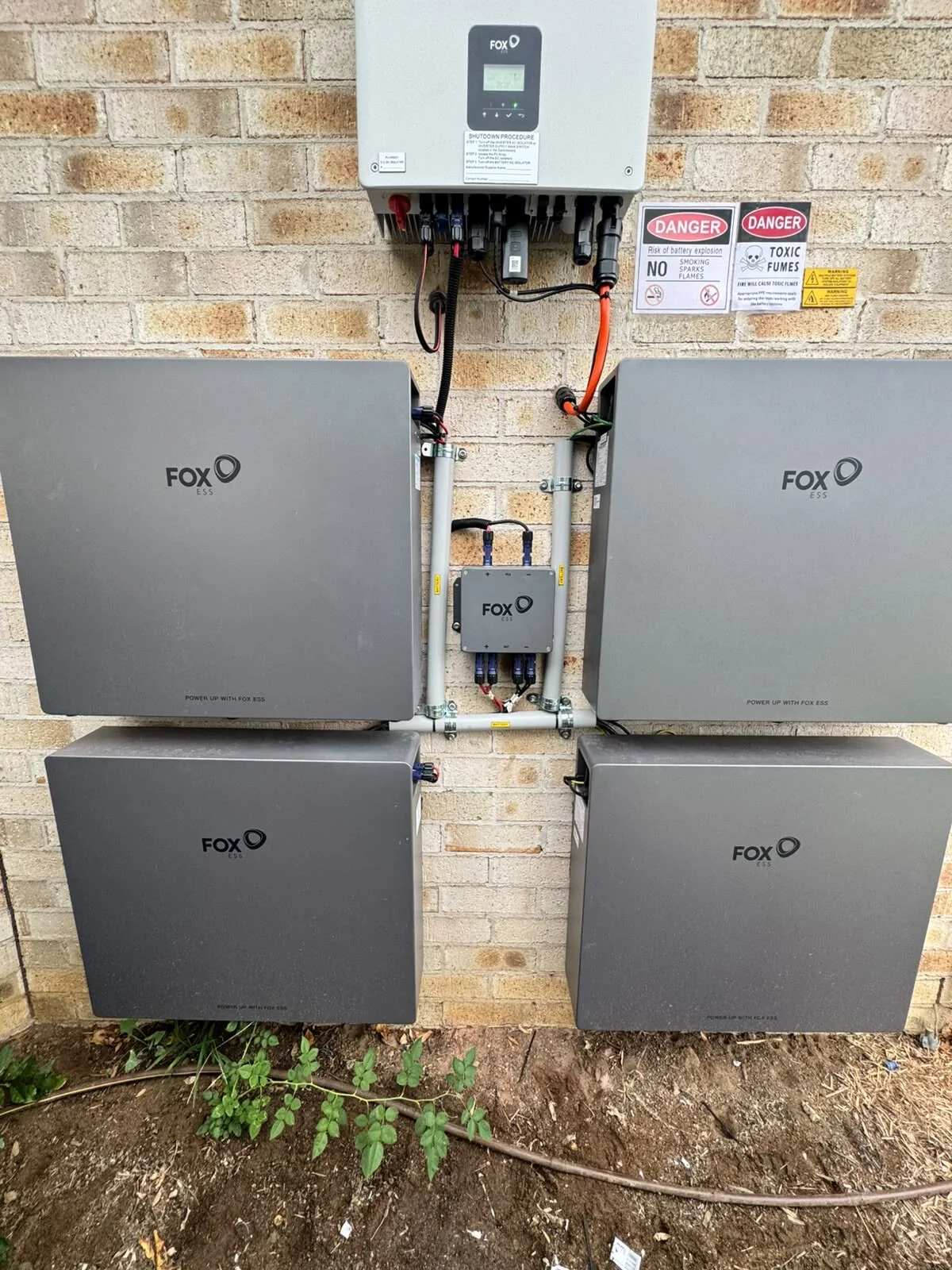
FoxESS
Hybrid inverter and battery systems, commonly paired for a retrofit onto existing FoxESS inverters.
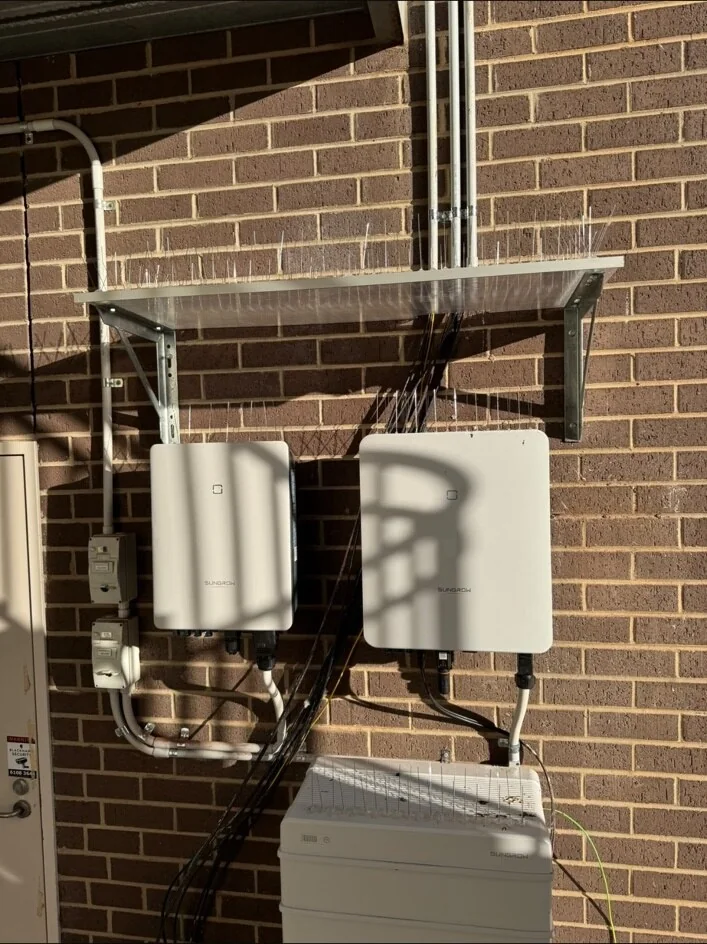
Sungrow
Widely installed hybrid inverter and battery range, often paired with new solar installs.
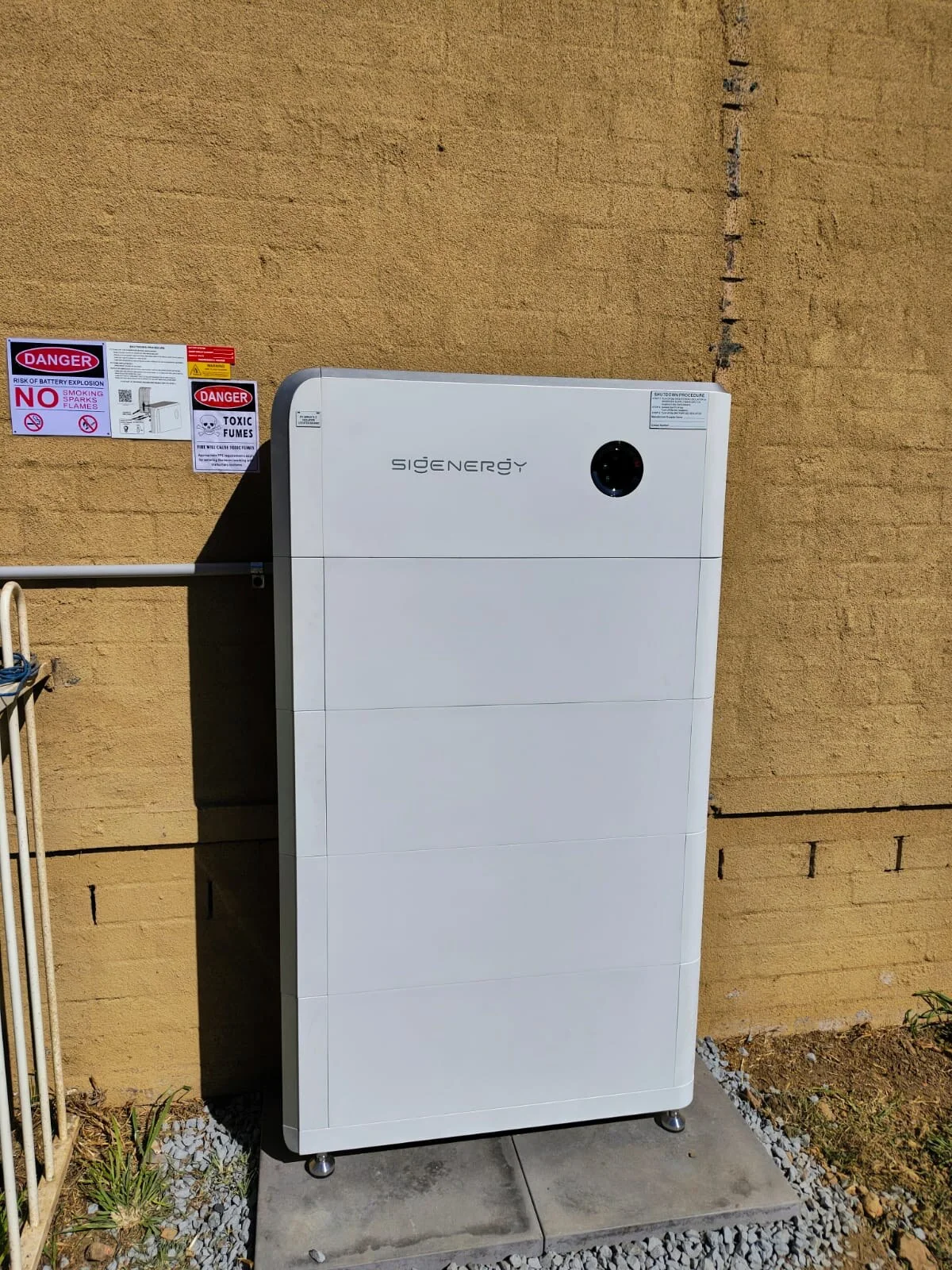
Sigenergy
Newer-generation hybrid battery/inverter system with app-based monitoring.
GoodWe
Hybrid inverter and battery systems, a common retrofit option for existing GoodWe solar installs.
We recommend a brand based on your existing equipment and goals during your assessment, not a single default.
Backup vs savings
Two different benefits, not automatic together
Savings
Store solar you'd otherwise export for little value, and use it in the evening instead of buying grid power. This happens automatically once the battery's configured.
Backup
Keeps chosen circuits running during a blackout. Only available where backup circuits and changeover equipment are specifically designed and installed for it — not every battery installation includes this.
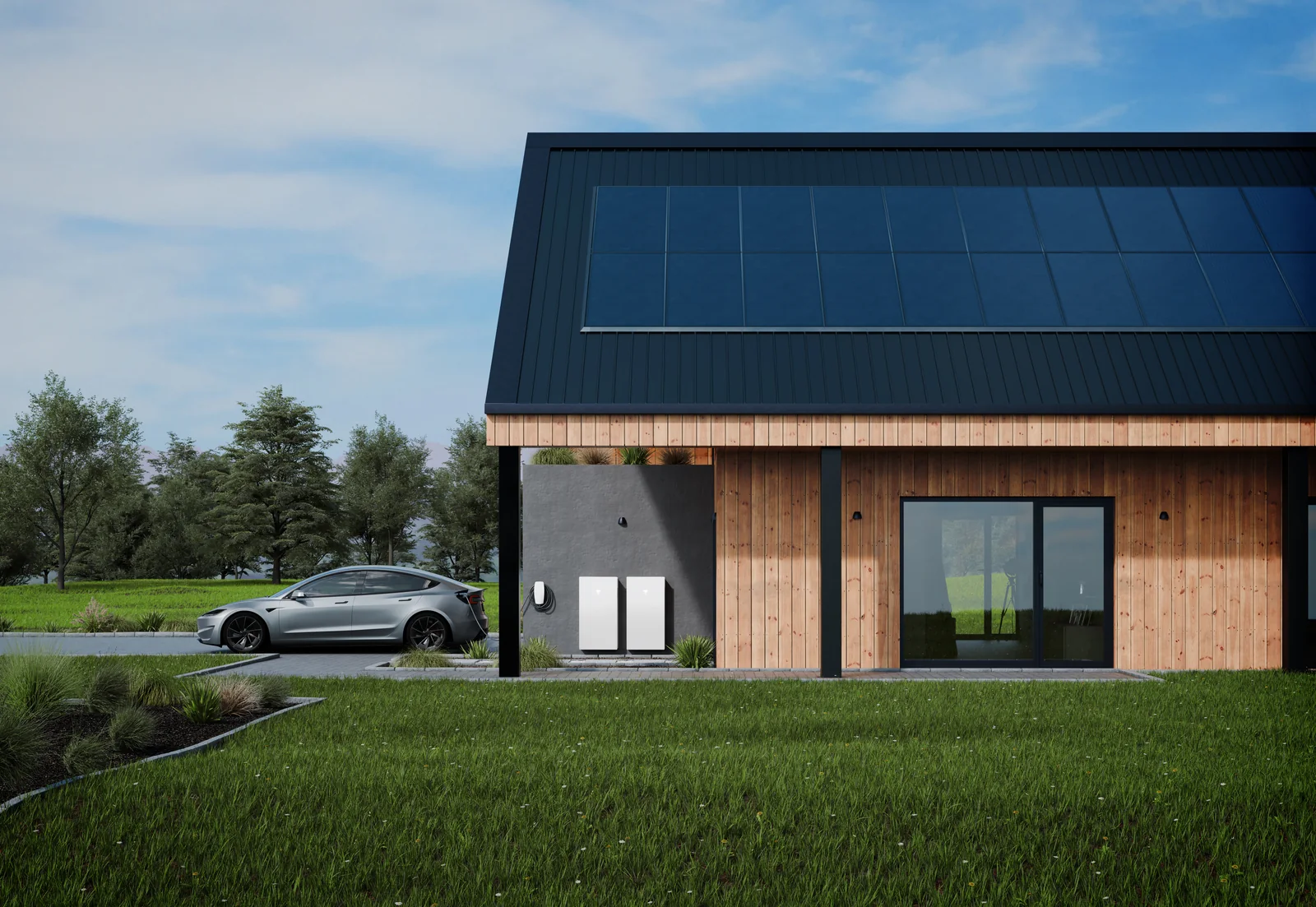

Tesla Powerwall 3
We're a Tesla Powerwall Certified Installer. If you're considering Powerwall 3 specifically, see how it fits alongside solar and backup planning.
Tesla Powerwall 3 installationCommon questions
Battery storage, answered plainly
Is a battery right for my existing solar?
It depends on how much solar you currently export unused, your evening electricity use, and your existing inverter's compatibility. A short assessment of your bill and system details usually answers this before any site visit.
What should I know about backup power?
Most battery systems don't automatically back up your whole home — backup is usually a defined set of essential circuits, set up deliberately during installation. It's worth deciding what should stay on before the system is designed.
Will a battery work with my current inverter?
Some inverters have a matching battery from the same manufacturer; others need an AC-coupled battery with its own inverter. We'll confirm what your specific system supports before quoting.
Recent work
Recent battery work